The moments of the class
- General introduction. Who we are and what the class does.
- The site. Where the material is, and where it stays after the class.
- Simulations — first round. Pre-class.
- Class — Hypertension. From diagnosis to treatment.
- Class — Cardiovascular risk. From stratification to the prescription on paper.
- Simulations — second round. Post-class.
- Extra. Extra simulations, in-class feedback, and ideas for adjustment.
1. General introduction
- Escola de Pacientes: teaching, research, and outreach in health, active since 2016 at UnB and in the Federal District network.
- What today's class covers: systemic arterial hypertension, from diagnosis to treatment, and the cardiovascular risk that decides management.
- How the session is organized: two rounds of simulation, one before and one after the class, with the averages compared at the end.
- What the first round is and what it isn't: the group's baseline, not an individual assessment.
2. The site
- The class material doesn't end today: it stays published and open.
- Each topic has its own page, with slides, the Treatise chapter, PACK, patient guidance, and the Drive folder.
- This lesson plan page stays online after the class, with all the links.
3. Simulations — first round (pre-class)
- What SimulaPacientes is: a digital patient, a consultation conducted in writing, item-by-item feedback on your own management.
- Why the consultation is written, and what the feedback shows at the end.
- Class code.
- First round, fifteen timed minutes — the QR code at the end of the page opens the case.
- What this round is: the group's baseline, before the class.
4. Class — Hypertension
5. Class — Cardiovascular risk
- Blank sheet. Three prescriptions in the PACK sequence, without consulting the slides: the first with low-dose enalapril, together with the request for stratification tests; the second switching to losartan, when cough appears; the third adding a second antihypertensive to the first. The sheets change hands and the correction is made against the flowchart.
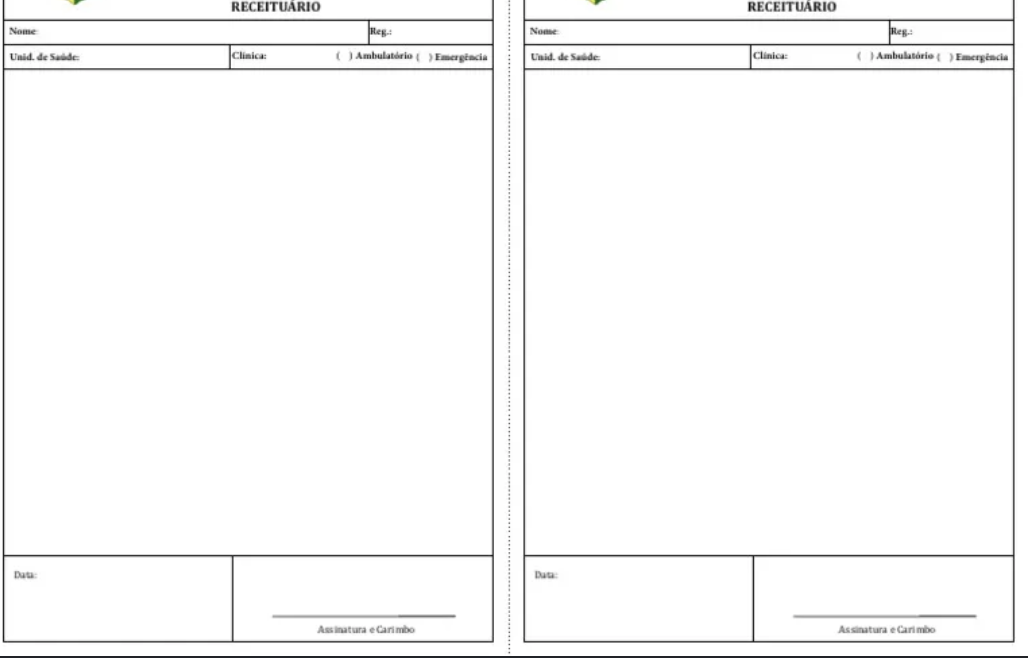
What the regulation requires on the prescription. Under Law No. 5,991/1973, art. 35, as amended by Law No. 14,063/2020, a prescription is only filled if it is written in the vernacular, without abbreviations and legibly, in official nomenclature and units (item I); if it includes the patient's name and home address and, expressly, the way to use the medication (II); and if it includes the date, the health professional's signature, the address of the office or residence, and the professional council registration number (III). The same article says that the prescription is valid throughout the national territory, whichever entity issued it (§ 1), and that an electronic prescription is only valid with an advanced or qualified electronic signature — qualified is mandatory when the drug is under special control (§§ 2 and 3). In SUS, prescribing must use the generic name: DCB or, failing that, DCI (Law No. 9,787/1999). And a specially controlled medication does not go on this sheet: it goes on a Prescription Notification or a Special Control Prescription in two copies, in the model of SVS/MS Ordinance No. 344/1998.
menu_bookStep-by-step treatment — transcribed from PACK Brasil 2025, p. 145 ("Hypertension: treatment"). The full PDF is on the Hypertension page.
-
Manage cardiovascular risk
- Support for change (PACK p. 17) and manage modifiable CVR factors (p. 136) for 3 months.
- After 3 months, if BP is not controlled, add step 2.
-
Hidroclorotiazida 25mg/dia or enalapril 10–40mg/dia
Hidroclorotiazida (HCTZ) 25mg/dia — primeira escolha.
- Prescribe 25mg/day in the morning.
- If DM, CKD, LV hypertrophy, or HF: start with enalapril in place of HCTZ and, if BP is not controlled in 4 weeks, add HCTZ.
- Do not prescribe if pregnant, gout, eGFR < 30, or severe liver disease. Avoid if current or family history of skin cancer.
Enalapril 10mg – 40mg/day — first choice if DM, CKD, LV hypertrophy, or HF.
- Start with 10mg/day.
- If BP is not controlled in 4 weeks, add HCTZ 25mg/day. If already on enalapril 10mg/day and HCTZ, increase to 20mg/day.
- If already on enalapril 20mg/day, increase to 20mg every 12 hours. If still not controlled, add step 3.
- Do not prescribe if pregnant or breastfeeding, prior angioedema, eGFR < 30. Do not start if potassium ≥ 5; stop if ≥ 5.5.
Adverse effects. HCTZ: reduced glucose tolerance, gout, gastrointestinal changes, skin cancer risk. Enalapril: cough (replace with losartan 50–100mg/day, p. 46), dizziness. If swelling of the tongue, lips, or face, or shortness of breath: stop enalapril or losartan.
-
Anlodipino 5–10mg/dia
- If BP is not controlled with steps 1 and 2 (also consider amlodipine in Raynaud's disease — discuss): start with 5mg at night.
- If BP is not controlled in 4 weeks, increase to 10mg/day. If still not controlled, add step 4.
- Do not prescribe if decompensated HF. If stable HF, discuss.
Adverse effects. Ankle edema, dizziness, facial flushing, headache, fatigue.
-
Espironolactona 25mg/dia
- If BP is not controlled with steps 1, 2, and 3 (or similar drugs) at the maximum or tolerated dose: start 25mg/day. Do not prescribe if pregnant.
- If already on spironolactone and BP is not controlled after 4 weeks, discuss or refer.
- Monitor potassium (K) and eGFR before starting and after 2 weeks.
- If K ≥ 4.5 or eGFR ≤ 45: do not start, or stop, and discuss — consider carvedilol (step 5) instead.
Efeitos adversos. Ginecomastia.
-
Carvedilol 6.25–25mg 12/12h or propranolol 40–320mg 12/12h
- If stable HF, ischemic heart disease, tachyarrhythmia, or a contraindication to spironolactone, and BP is not controlled: prescribe carvedilol 6.25mg every 12 hours. Increase every 4 weeks if BP is not controlled, up to 25mg (if > 85kg, 50mg) every 12 hours.
- If there are no signs of HF and there is essential tremor, hyperthyroidism, or migraine: prescribe propranolol 40mg every 12 hours instead. Increase every 4 weeks if BP is not controlled, up to 320mg every 12 hours.
- Do not prescribe either if decompensated HF or severe COPD/asthma. If HR < 60 before treatment, discuss.
- If COPD or mild to moderate asthma, do not prescribe propranolol and discuss using carvedilol or alternatives.
Adverse effects. Chest tightness, fatigue, bradycardia, headache, cold hands and feet, sexual impotence, orthostatic hypotension.
Reassess patients with uncontrolled BP every 4 weeks and patients with controlled BP every 6 months.
6. Simulations — second round (post-class)
- A quick form on which artificial intelligences each person already uses.
- Second round, now with the class given.
- The averages of the two rounds side by side, in front of the class.
- What the difference between them says — and what it doesn't.
7. Extra: extra simulations
- Anyone who wants can run extra cases, at their own pace.
- Extra in-class feedback on what appeared in these rounds.
- Ideas for adjustment: what to change in the case, in the rubric, and in the class itself.
Open the simulation

Or open it directly: simulation link ↗